Planning to hike Beehive Basin Trail? Find trail details, difficulty, parking tips, the best viewpoints, seasonal advice, and everything you need for an epic day in Big Sky.
Without doubt, Beehive Basin Trail is Big Sky's most spectacular hike. Few hikes around town boast as much scenery for the effort as this one. Within a few miles, you'll pass through flower-filled meadows, evergreen forests, glacial landscapes, and end at a crystal-clear alpine lake framed by some of Montana's most rugged peaks. Sounds magical, right? And it is!
Rated as moderate, Beehive Basin is accessible to most reasonably fit hikers, although the high elevation and final climb can be challenging for some. So it's important to get acquainted with all the details and specifics of the trail before you go.
Below, I've put together a guide to Beehive Basin Trail so you'll know what to expect and can plan a safe, smooth, and beautiful hike through this Montana treasure.
But first, a little about us:
At Big Sky Vacation Rentals, we offer a handpicked collection of more than 125 luxury vacation homes across Big Sky and Moonlight Basin. Our local team is always happy to help you find the best local experiences and make your Montana getaway as smooth as possible.
Explore our vacation blog where you'll find expert tips on fly fishing, finding the best restaurants in town, as well as the best places to work remotely, and much more.
Ready for Beehive Basin Trail? Let's uncover everything you need to know before you go.
How to Get to Beehive Basin Trail from Big Sky
The main Upper Beehive Basin Trailhead sits just a couple of miles north of Big Sky Resort. From Highway 191, turn west onto Highway 64 (Lone Mountain Trail) and continue for roughly 10 miles toward Big Sky. Turn right onto Beehive Basin Road and follow the paved road for another 1.5 to 2 miles until you reach the trailhead.
The final stretch climbs steeply before reaching the parking area. The route is usually clear throughout summer, although snow and ice can make the final section slippery during winter and the shoulder seasons.
There's also a Lower Beehive Basin Trail near the entrance to Big Sky Resort. It joins the main trail after 1.4 miles and adds about 3 miles round trip if you'd like a longer day on the mountain.
Trail Overview
The standard Beehive Basin Trail is an out-and-back hike covering approximately 6.3 to 7.5 miles round trip. Depending on your pace and how long you spend at the lake, most hikers complete it in three to five hours.
The route starts between roughly 7,500 and 7,900 feet before climbing to over 9,200 feet at the basin. Total elevation gain ranges from approximately 1,300 to 1,800 feet.
Although it's generally classified as a moderate hike, don't underestimate the altitude. Visitors arriving from lower elevations often notice the thinner air during the final climb.
Is Beehive Basin Trail Difficult?
Beehive Basin asks for some effort, but never crosses into gruelling territory. The climb is steady, with the elevation spread over several miles. Flatter stretches between glacial moraines offer welcome pauses before the trail tilts uphill again.
You should save a little energy for the final push. The last climb is the steepest and most demanding section, but it doesn't last long before the trail levels out inside the broad glacial basin.
Here's the secret about the trail: the biggest test isn't the gradient, as many people think, but the altitude. Rising above 9,000 feet, the thinner air often surprises visitors arriving from lower elevations. Take your time, drink plenty of water, and let your pace adjust naturally as you climb.
What to Expect Along the Trail
What people like most about Beehive Basin is that the trail packs a variety of landscapes into a relatively short hike.
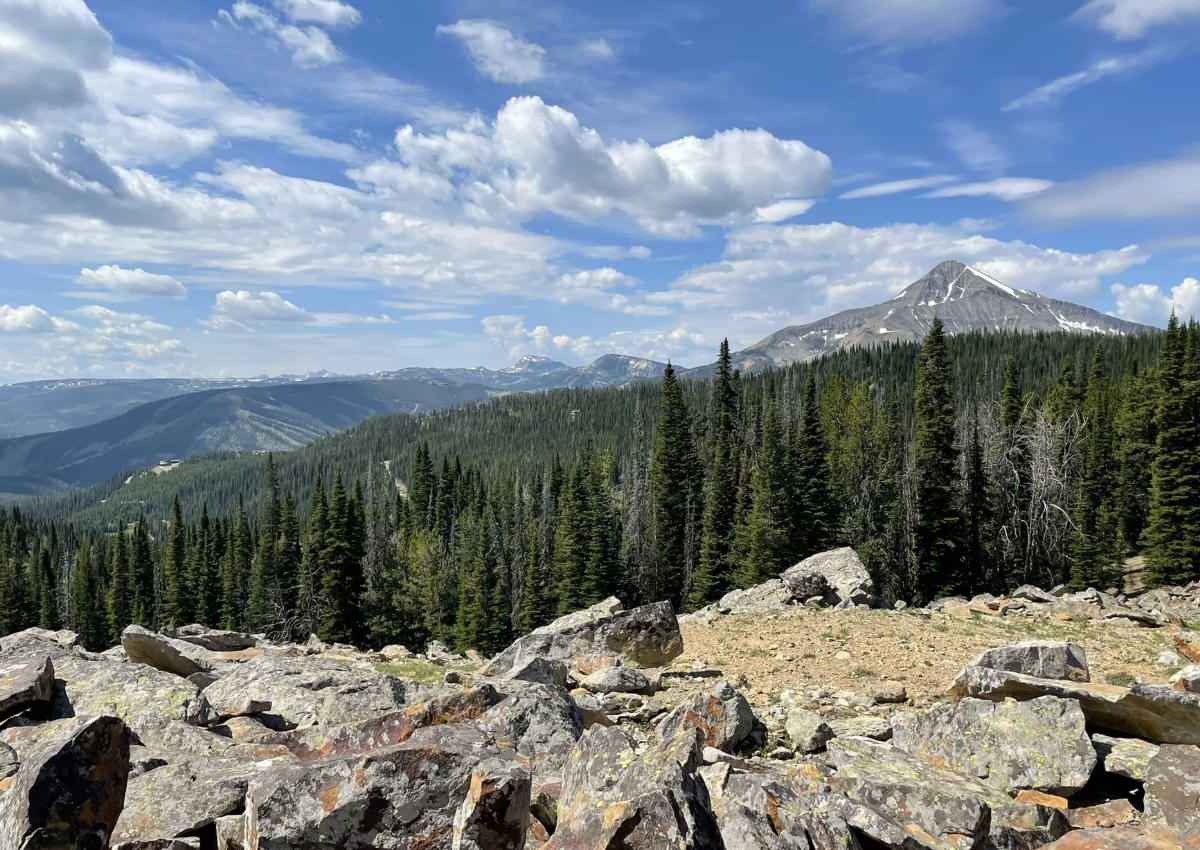
The first mile crosses a private-property easement before entering open meadows and patches of fir, spruce, and whitebark pine. Early on, you'll cross a log bridge and begin enjoying your first views of Lone Peak rising behind you.
Around a mile into the hike, you'll reach a signed T-junction. Stay left to continue toward Beehive Basin. The right-hand trail leads toward North Fork and Bear Basin.
Beyond the junction, the scenery takes on a wilder character. The trail climbs over a series of glacial moraines that create a natural staircase. Rather than one relentless climb, you'll alternate between switchbacks and flatter sections through grassy meadows, forests, and alongside Beehive Creek.
As you already know, the final climb is the steepest part of the hike. Cresting the last rise, the landscape suddenly opens into the broad glacial basin that gives the trail its name.
The Views That Make the Hike Famous
Many returning hikers agree that Beehive Basin Trail offers a complete alpine experience.
Throughout the ascent, Lone Peak is an ever-present sight, its distinctive ski runs clearly visible across the valley. As you climb higher, the surrounding ridges of the Spanish Peaks dominate the skyline, making the mountain views even more striking.
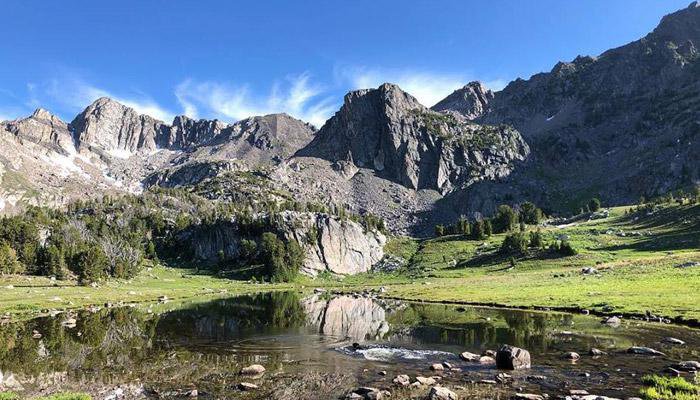
At the heart of Beehive Basin is a spectacular U-shaped glacial basin surrounded by rugged granite summits, including Beehive Peak, Blaze Mountain, and Gallatin Peak.
Don't stop at the shoreline.
Continue another quarter to half a mile beyond the lake on the obvious path leading to the overlook above the basin. From here, the lake appears to spill into the horizon, creating the famous "infinity pool" effect that has made this one of Big Sky's signature viewpoints.
If you're still feeling energetic, a faint boot path continues higher toward the base of Beehive Peak, where you'll enjoy even broader panoramic views and far fewer people.
Wildflowers & Wildlife
Beehive Basin is very famous for its summer wildflower displays.
From late June through August, the meadows burst into colour with nearly 300 species. Purple lupine, Indian paintbrush, bluebells, arrowleaf balsamroot, geraniums, and the distinctive Elephant's Head flower blanket the basin.
Wildlife sightings are also pretty common. Keep your eyes peeled for moose, elk, mountain goats, black bears, and grizzly bears.
Local tip: Always carry bear spray and wear hiking bells. The continuous jingle alerts wildlife to your approach, helping you avoid accidentally startling an animal, which is the primary cause of defensive attacks.
When Is the Best Time to Hike Beehive Basin?
July and August are the busiest months thanks to warm weather and peak wildflower season. Expect company on the trail and arrive early if visiting during summer weekends.
September offers a completely different experience. Golden vegetation replaces the wildflowers, wildlife activity increases, and the crowds begin to thin out. The weather is generally pleasant, although snow, mud, or ice can appear without much warning.
Spring arrives slowly at this elevation, so expect snow patches well into June. Some seasons still call for traction devices or snowshoes.
During winter, the trail transforms into a popular destination for backcountry skiing and snowshoeing. But here's a heads-up: Avalanche danger exists in the basin, and only experienced, properly equipped visitors should venture there in snowy conditions.
Practical Tips Before You Go
- The trailhead parking area is small, holding only around 15 to 20 vehicles. During summer, it fills by 7 or 8 a.m., so arriving early gives you the best chance of securing a space.
- There are no reliable restroom facilities at the trailhead. Your best option is to stop at the Conoco station on Highway 64 before heading up Beehive Basin Road.
- Cell service disappears once you're on the trail, so download offline maps before leaving Big Sky.
- The weather changes quickly at high elevations. Even on warm summer days, you should pack an extra layer, sun protection, and plenty of water. Around 64 ounces per person is a sensible starting point.
- Sturdy hiking boots are recommended for the rocky and sometimes muddy trail. Trekking poles are also helpful on the rocky sections and the final descent.
- Remember that the first section of trail crosses private property. Make sure to stay on the designated path to help preserve public access for future hikers.
Is Beehive Basin Worth It?
Absolutely!
Beehive Basin combines nearly everything hikers hope to find in the Montana mountains: alpine lakes, granite peaks, sweeping views, wildflowers, wildlife, and a trail that demands stamina rather than technical ability.
Even a short stay in Big Sky is enough to justify setting aside a morning or afternoon for Beehive Basin. Arrive early, pace yourself on the climb, continue past the lake to the overlook, and you'll understand why the trail and the basin itself live up to their reputation.
Time to Plan Your Big Sky Getaway!
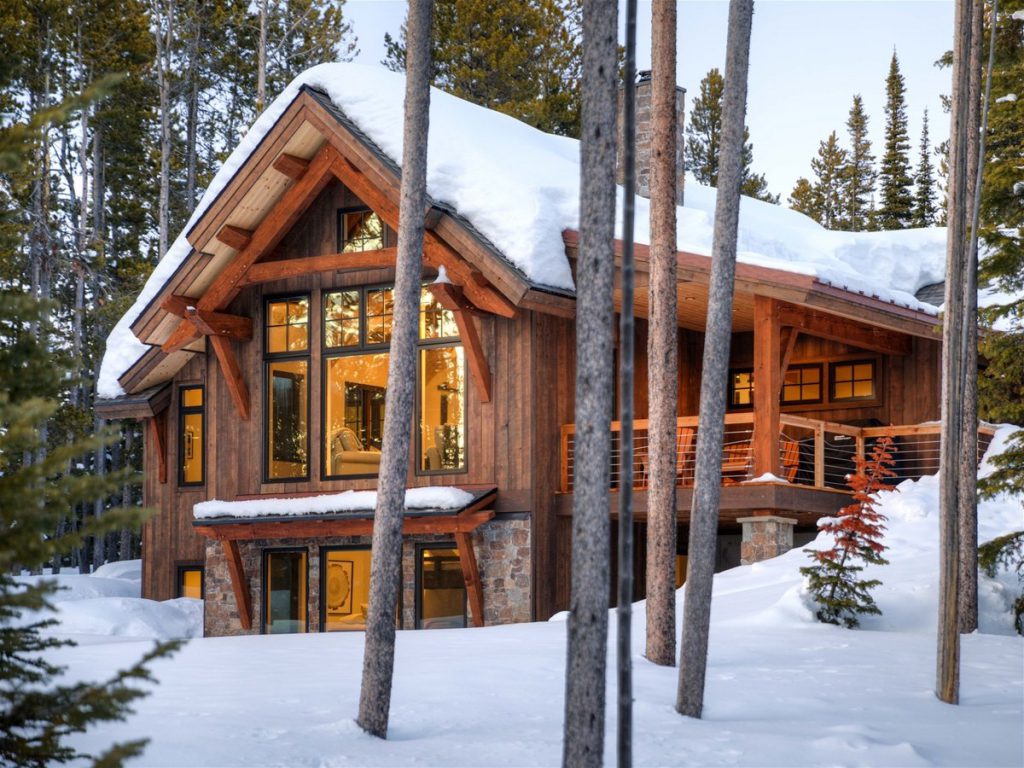
Towering mountain scenery, world-class skiing, blue-ribbon rivers, endless trails, and wide-open Montana landscapes all await in Big Sky. At Big Sky Vacation Rentals, you'll certainly find the perfect home base for you and your family, one that's sure to be one of the highlights of your visit.
We hope to welcome you to Big Sky soon!