Yellowstone's biggest highlights fit into one epic day. Follow this scenic itinerary from Big Sky covering geysers, wildlife, waterfalls, canyons, and practical local tips.
Day Trip to Yellowstone from Big Sky
Big Sky alone is already packed with reasons to visit. Here, you'll enjoy towering mountains, world-class skiing, blue-ribbon fly fishing, endless hiking trails, and the wide-open Montana scenery that defines every outdoor adventure. As if that weren't enough, America's first national park sits just down the road. If you're planning a trip to Big Sky, it would be a shame not to make the journey to this natural wonder.
Yellowstone National Park sits only about 15 miles south of Big Sky, with the West Entrance roughly an hour away. In other words, there's no need to pack up and change hotels to experience Yellowstone if you're using Big Sky as your base. And if you're thinking a day trip might be too ambitious, the answer is: absolutely not!
Below, I'll show you how to spend one incredible day in Yellowstone, covering the park's biggest attractions, the best route to follow, what each season offers, and practical tips to help you make the most of your visit.
But before we explore America's first national park, a little about us:
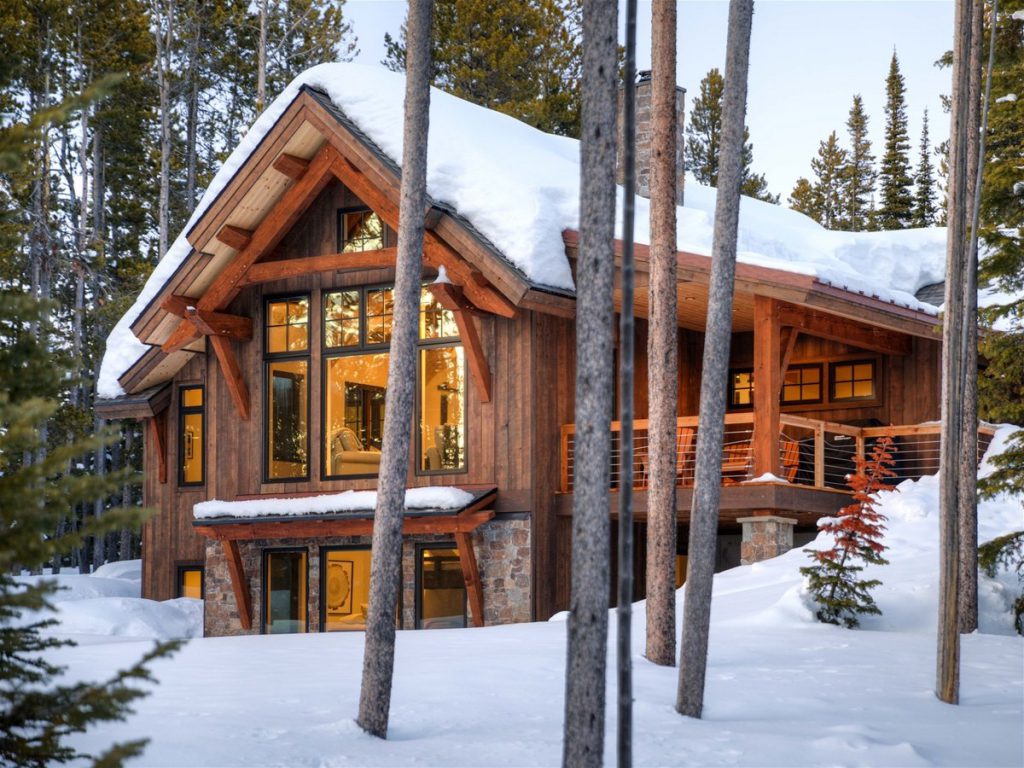
At Big Sky Vacation Rentals, we offer a handpicked collection of more than 125 luxury vacation homes across Big Sky and Moonlight Basin. Our local team is always happy to help you find the best local experiences and make your Montana getaway as smooth as possible.
Explore our vacation blog where you'll find expert tips on fly fishing, finding the best restaurants in town, as well as the best places to work remotely, and much more.
Why Yellowstone Is Unlike Anywhere Else
It's hard to think of another place that rivals Yellowstone's diversity of landscapes.
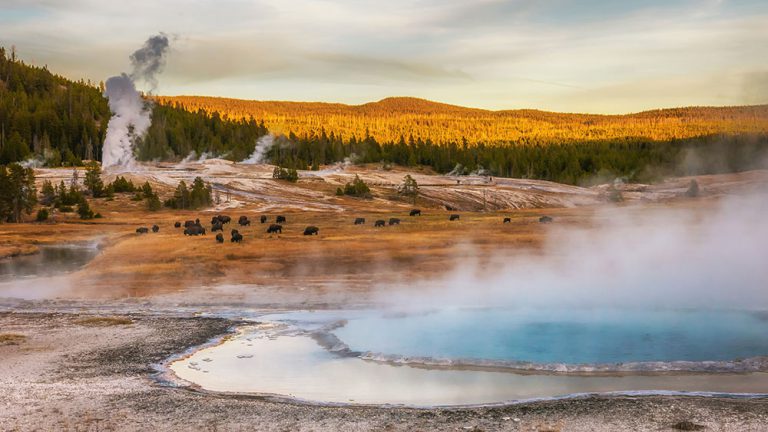
Established in 1872 as one of the world's first national parks, Yellowstone protects nearly 3,500 square miles of mountains, forests, rivers, lakes, waterfalls, wildlife, and the planet's largest concentration of geothermal features.
In a single visit, you can watch Old Faithful launch boiling water high into the sky, stand beside a rainbow-colored hot spring, then head off to spot bison wandering across a valley or gaze down into a dramatic canyon carved by the Yellowstone River.
It's that variety that attracts millions of visitors to Yellowstone every year. No two hours inside the park are ever quite the same.
Getting to Yellowstone from Big Sky
The drive to Yellowstone's West Entrance follows US Highway 191 south for roughly 50 miles, usually taking about one hour. Long before reaching the entrance station, you'll already be surrounded by beautiful scenery as the road follows the Gallatin River through Gallatin Canyon beneath steep mountain walls.
Keep your eyes open during the drive. Elk, deer, and occasionally even bears can appear along the route before you officially enter Yellowstone.
During summer and fall, you can simply drive your own vehicle into the park through the West Entrance. Winter is a different story. Most interior park roads are closed to regular traffic, meaning anyone wanting to visit Old Faithful or the Canyon area must join a guided snowcoach or snowmobile tour departing from West Yellowstone.
Yellowstone Changes Completely Throughout the Year
On top of the diversity of landscapes and natural wonders found throughout the park, every season gives Yellowstone something different and unique.
Summer: Yellowstone at Full Speed
Summer is Yellowstone's busiest season. Nearly every road, trail, visitor center, and geothermal basin is open. Boardwalks wind through steaming geyser basins, Yellowstone Lake welcomes boaters and anglers, hiking trails are fully accessible, waterfalls run at full force and ranger programs take place throughout the park.
The only downside is the crowds, with most annual visitors arriving during June, July, and August.
Autumn: Fewer People, More Wildlife
Many experienced Yellowstone visitors consider September one of the best months to visit.
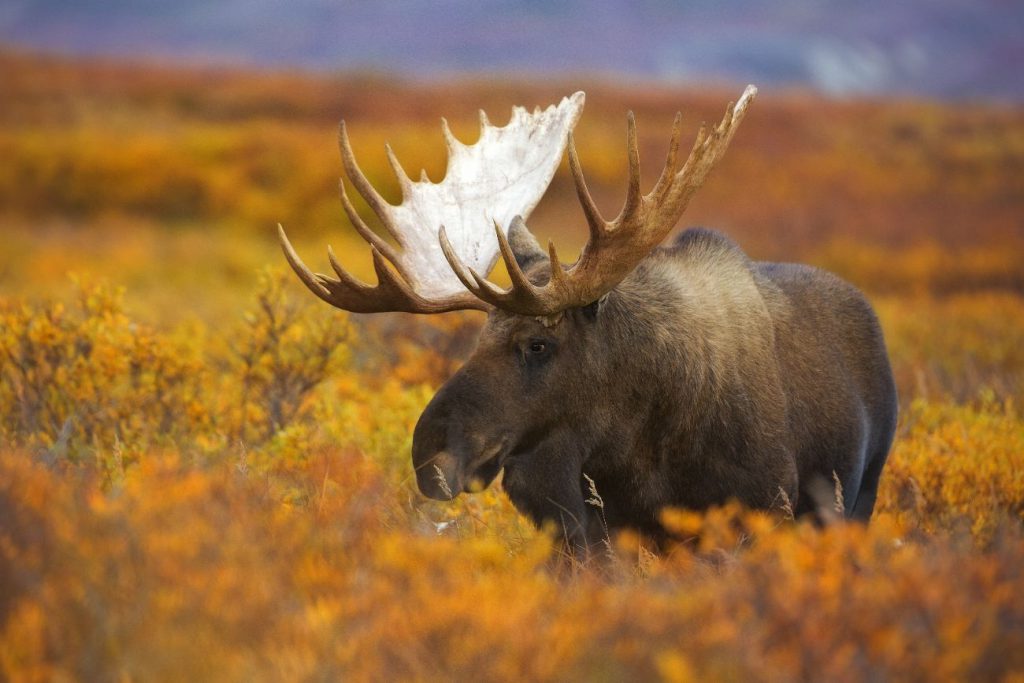
You can enjoy pleasant temperatures, fewer summer crowds, and more active wildlife. You can expect, for example, elk bugling across the valleys during the annual rut and quieter hiking trails. Of course, the fall colors transform the park into something even more beautiful.
Winter: A Completely Different Yellowstone
Winter transforms Yellowstone into something almost surreal. That's the season when you can watch steam rising dramatically from geothermal pools against snow-covered landscapes. And there's one underrated thing many people really enjoy: silence. Winter is the best time to experience the park almost completely free of crowds and incredibly quiet. Make sure to try cross-country skiing and snowshoeing, two very popular activities once winter arrives.
As I mentioned earlier, personal vehicles cannot access the interior roads during winter, so guided snowcoach and snowmobile tours are the primary way to reach famous attractions such as Old Faithful.
Local tip: The road between Mammoth Hot Springs and Cooke City remains open year-round, making winter one of the best times to spot wolves in Lamar Valley.
Spring: Yellowstone Wakes Up
With snow retreating from the lower elevations, newborn wildlife begins appearing throughout the valleys, bears emerge from hibernation, and roads reopen one by one as conditions improve.
The weather can change quickly during this time, but if you're willing to embrace the unpredictability, you'll enjoy fewer crowds and excellent wildlife viewing throughout the spring.
How to Spend One Perfect Day in Yellowstone
Yellowstone is enormous. Trying to see everything in one day simply isn't realistic. Instead, focus on the famous Lower Loop, where many of the park's biggest highlights sit within a logical driving route.
Below, I've put together a suggested itinerary to help you make the most of a day trip to the park.
Morning: Beat the Crowds and Visit Grand Prismatic Spring
Leave Big Sky around 6:00 or 7:00 a.m.
Arriving at the West Entrance before 8:00 a.m. helps you avoid the long entrance lines that often build later in the morning during peak season.
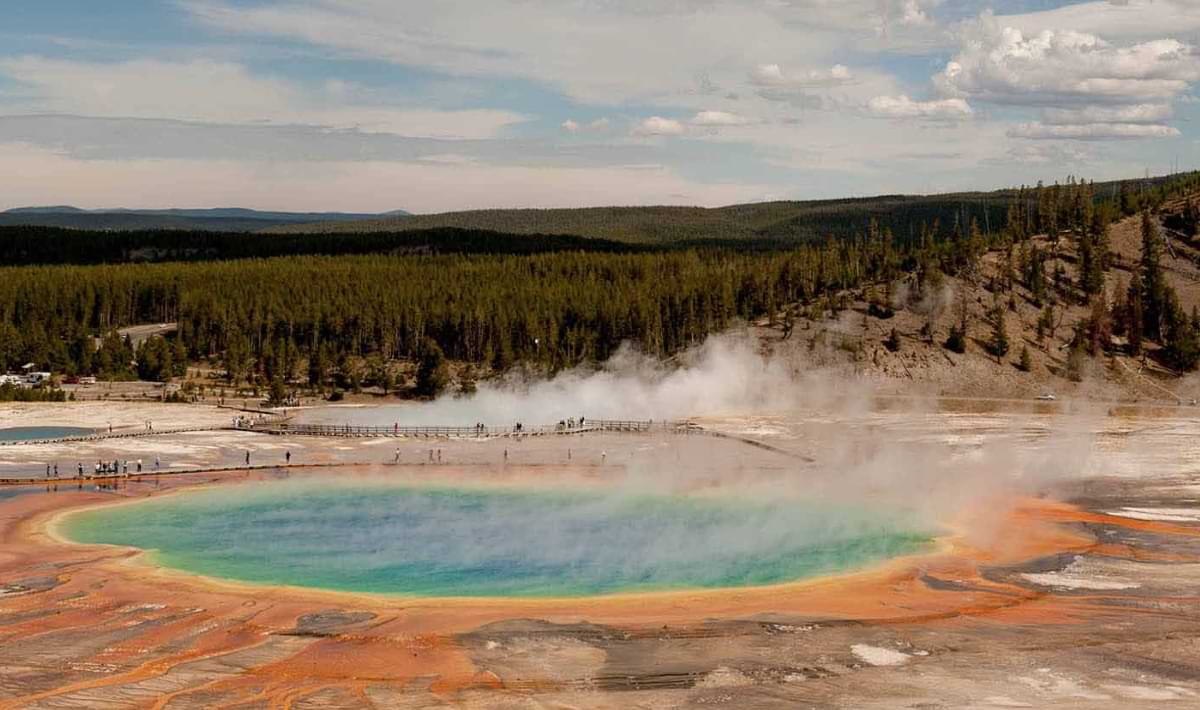
Your first destination should be Grand Prismatic Spring at Midway Geyser Basin. Yellowstone's largest hot spring is famous for its striking bands of blue, green, yellow, and orange created by heat-loving microorganisms.
For the classic postcard view, continue to the nearby Fairy Falls Trailhead and take the short walk to the Grand Prismatic Overlook. From above, the spring's vivid colors reveal themselves much better than from the boardwalk below.
Late Morning: Old Faithful and the Upper Geyser Basin
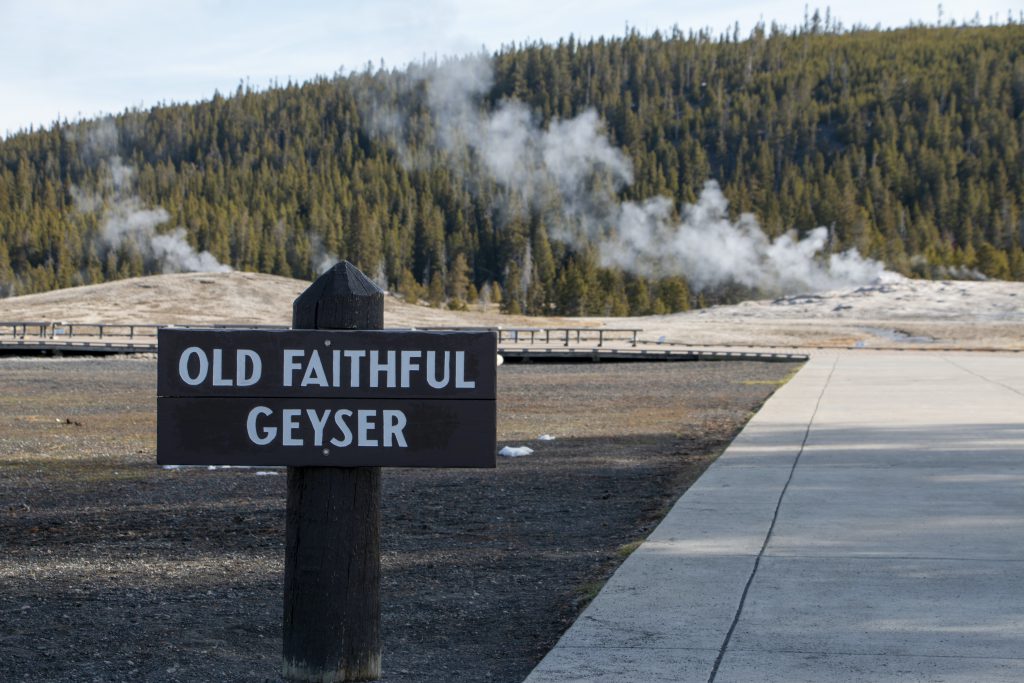
If this is your first visit to Yellowstone, stopping at Old Faithful is not optional.
Although it isn't Yellowstone's tallest geyser, it's one of the world's most famous thanks to its predictable eruptions. You can check the posted eruption schedule at the Visitor Center, then use the waiting time to explore the surrounding Upper Geyser Basin, home to one of the highest concentrations of geothermal features anywhere on Earth.
Before leaving, step inside the historic Old Faithful Inn. Built in 1904, almost entirely from massive logs and stone, it's considered an American treasure and is worth seeing even if you're not staying overnight.
Early Afternoon: Yellowstone Lake and Hayden Valley
Continue east toward Yellowstone Lake, the largest high-elevation lake in North America. It's a peaceful contrast to the park's bubbling geysers, with expansive views across the water toward distant mountain peaks. If time allows, stretch your legs along the shoreline or stop by the historic Lake Yellowstone Hotel before continuing.
Next comes Hayden Valley, one of Yellowstone's premier wildlife destinations. This broad valley is home to enormous bison herds, along with elk, coyotes, grizzly bears, black bears, and even wolves. Wildlife sightings are never guaranteed, but you should keep your binoculars close at hand.
Be patient as you drive through. Animal jams are part of the Yellowstone experience, and sometimes they're the highlight of the entire day.
Mid-Afternoon: The Grand Canyon of the Yellowstone
Your next stop is one of Yellowstone's most spectacular landscapes.
The Grand Canyon of the Yellowstone stretches roughly 20 miles through brilliantly colored volcanic rock carved by the Yellowstone River. Its biggest attraction is the Lower Falls, which plunge an impressive 308 feet into the canyon below.
Head to Artist Point for the classic panoramic view that has inspired photographers for generations. If you're happy with a short but steeper walk, continue down the Brink of the Lower Falls Trail for an epic close-up of the roaring waterfall.
Late Afternoon: Norris Geyser Basin
On your return toward the West Entrance, stop at Norris Geyser Basin.
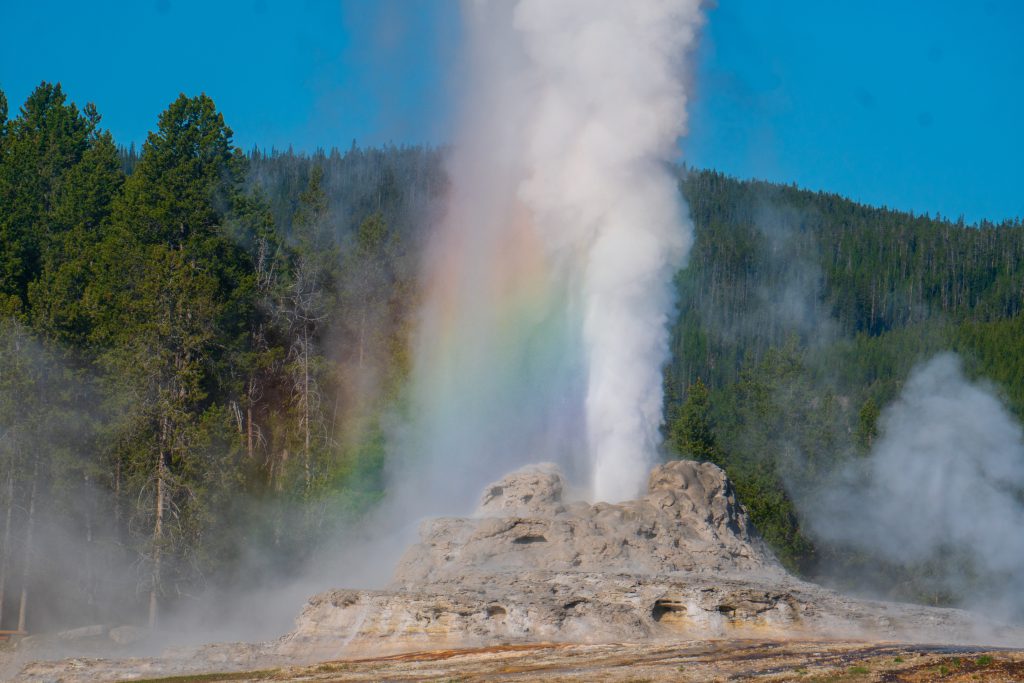
This is Yellowstone's hottest and most dynamic geothermal area, constantly changing as underground volcanic activity reshapes the landscape. It's also home to Steamboat Geyser, the tallest active geyser in the world.
At Norris, you can wrap up your visit by walking along wooden boardwalks that wind past steaming vents, bubbling pools, colorful mineral deposits, and constantly hissing fumaroles.
Practical Tips for Making the Most of Your Visit
- The earlier you leave Big Sky, the better. Entering the park before 8:00 a.m. helps avoid the longest entrance lines and gives you the best opportunity to see wildlife before traffic builds.
- Download offline maps before leaving Big Sky. Cell service is extremely limited throughout the park, so GPS navigation can be unreliable once you're inside.
- Wildlife deserves plenty of space. Stay at least 100 yards from bears and wolves and at least 25 yards from bison, elk, and every other animal. Bison may look calm, but they injure more visitors than any other Yellowstone wildlife.
- Stay on the boardwalks in every geothermal area. Beneath the thin ground lies boiling water capable of causing severe injuries. Those wooden walkways exist for a very good reason.
- If you plan to venture beyond the main boardwalks and scenic areas, carry bear spray and know how to use it before starting your hike.
- Food inside Yellowstone exists, but planning ahead makes the day much smoother. Many regular visitors prefer packing a cooler in Big Sky with water, snacks, sandwiches, and a picnic lunch. Besides saving money, it also saves valuable sightseeing time. If you'd rather buy food inside the park, you'll find dining facilities around Old Faithful, Canyon Village, and Lake Village, although queues can grow long during summer.
Time to Plan Your Big Sky and Yellowstone Adventure
Towering mountain scenery, world-class skiing, blue-ribbon rivers, endless trails, and wide-open Montana landscapes all await in Big Sky. At Big Sky Vacation Rentals, you'll certainly find the perfect home base for you and your family, one that's sure to be one of the highlights of your visit.
We hope to welcome you to Big Sky soon!